
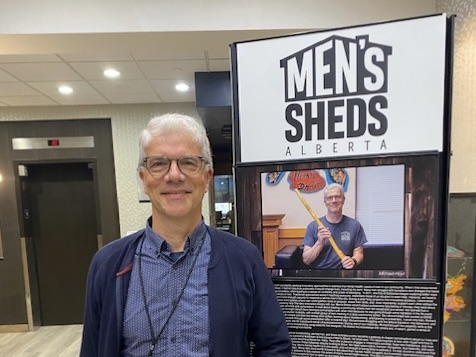
Michael kindly shared this very personal perspective on the role of Men’s Sheds in supporting men’s mental health and well-being:
As a health professional, I am constantly seeking innovative approaches to address the mental health needs of men in our community. When I first encountered the concept of the Men’s Shed, I had no idea how profoundly it would change lives, including my own. Many men grapple with transitions and changes that leave them feeling isolated and purposeless, often leading to a sense of invisibility and a lack of belonging.
In 2011, the City of Edmonton began exploring better ways to serve the mental health needs of men. Traditional approaches weren’t reaching everyone, especially those of us reluctant to seek help. However, we faced a significant challenge: we didn’t have enough capacity to respond to all the men in the city. During a year-long project to find innovative solutions, I discovered Men’s Sheds in Australia. These were spaces where men could gather, work on projects, share their skills, and, most importantly, support each other without the stigma often associated with seeking help.
The idea resonated deeply with me. Men’s Sheds weren’t about professional counseling or therapy; they were about men helping men through shared activities and camaraderie. It was about creating a community where men felt valued and connected. We learned that in Edmonton, any man who thought he might benefit from having a conversation with other men because he was going through some transition in his life could attend these groups.
Our first shed started modestly, with a small group of men meeting in a local community center. Our second shed was located at SAGE Seniors Association. We began with simple activities like talking over coffee, learning about woodworking, and listening to presenters. I recall one man, Richard, who was referred to us by a social worker through social prescription after a hospital stay. Richard was struggling with the difficult transition into retirement, and his health had deteriorated significantly. He felt a profound sense of purposelessness.
During one of our meetings, Richard brought his carpentry skills to the shed and showed us that we could all try woodworking using tools he had designed. He shared his knowledge with others and, in return, gained a sense of belonging and support that had been missing from his life. Although we never got particularly good at woodworking, we had fun, and these activities
quickly became a gateway to deeper conversations about our lives and struggles.
Richard’s transformation was a powerful testament to the impact of Men’s Sheds. He once said, “I’m relearning how to look after myself and how to care about others.”
Men’s Sheds have since become a lifeline for many. They offer a place to engage in meaningful activities, forge new friendships, and most importantly, rebuild our mental health. However, these initiatives require funding to thrive. We need resources to maintain the spaces, buy materials, and reach out to more men who are silently struggling. Men’s mental health is in dire straits, and not enough is being done to address it.
It’s also crucial to understand that the true scale of the problem is often hidden. Many men don’t come forward to talk about their mental health struggles due to societal expectations and stigma. As a result, there are no comprehensive statistics to fully capture the extent of men’s mental health issues. This lack of visibility makes it even more vital to support initiatives like Men’s Sheds that encourage men to open up and seek help in a non-threatening environment.
The Men’s Shed movement provides a beacon of hope, but it cannot continue without support. Funding is crucial to ensure these safe havens remain available for men seeking connection and purpose. By investing in Men’s Sheds, we are investing in the mental well-being of our fathers, brothers, sons, and friends, helping them find their way back to a fulfilling and connected life.
In Edmonton, I witnessed the success of Men’s Sheds firsthand. The sheds provided a space where men could come together, share their stories, and support each other through various projects. The community saw the benefits, and more men began to participate. We learned that men will find the light if given the opportunity, and that they can organize themselves to achieve good purposes without always needing experts to lead them.
These spaces are more than just places to work on projects; they are sanctuaries where men can rediscover their sense of purpose and build lasting connections. As we continue to expand and support Men’s Sheds, we can make a significant difference in addressing the mental health crisis among men.
Michael Hoyt – Social worker with the City of Edmonton




Leave A Comment